

How Is Makeup Tested On Animals
i. What animals are used for cosmetics testing?
Tests on animals for cosmetics typically use rats, mice, guinea pigs, or rabbits, who are purpose-bred in secretive facilities. These animals volition live their lives confined to bleak cages, experiencing only bogus light, bland food, and the four walls of a laboratory. If they're lucky, they may be given a small toy, some nesting material, or a shelter every bit "enrichment". These sensitive animals deserve so much more than existence treated equally disposable laboratory equipment. Given the chance, male mice sing to their mates, rats play hide-and-seek, rabbits hop and spring with excitement, and guinea pigs love to conversation.
2. How many animals are used in cosmetics tests?
The exact figure isn't known, but information technology's estimated that at to the lowest degree 300,000 animals are used every year in tests for cosmetics products or ingredients in Communist china alone, and the global total is likely to be much higher.
3. What happens to animals used for tests? How do cosmetics companies test on animals?
Cosmetics tests on animals, whether for final products or their ingredients, are unscientific, cruel, and unethical. A single test for a cosmetics ingredient can utilize over one,000 rats or rabbits.
To see if their offspring volition be deformed in the womb, experimenters may force-feed hundreds of rabbits an ingredient throughout pregnancy before killing and dissecting them and their unborn babies. In other tests, experimenters allow the offspring to exist born, just for them to experience the same miserable fate every bit their mums. Experimenters monitor the rabbits' growth and survival rates, and in some cases, they continue to give them the substance and force them to mate to detect the fertility and toxicity effects on the subsequent generation.
The notorious Draize tests involve placing rabbits in restraining stocks so that they cannot struggle or wipe their optics. Experimenters pull their eyelids apart and apply chemicals onto the eye. In the similarly horrific pare test, experimenters typically apply chemicals onto the shaved skin of rabbits to check for the severity of the reaction. Later on the test is over, they kill the animals.
Rats used in inhalation tests are squeezed into narrow tubes in which they are immobilised and forced to inhale substances for hours on end, sometimes daily for weeks or months. Then, experimenters kill and dissect them.
These are just some of the ways in which animals may be used in toxicity tests. You tin read more almost the consequences of those tests here.
4. Take cosmetics tests on animals been banned in the UK and the European union?
Yes, both testing and marketing bans exist – merely go along reading, as this isn't the finish of the story.
Tests on animals for cosmetics products and their ingredients accept been banned in the United kingdom of great britain and northern ireland since 1998 and across the EU since 2009. A sales ban on animal-tested cosmetics products and ingredients was fully implemented across the Great britain and the EU in March 2013.
5. So, since 2013, all cosmetics for sale in the Uk and EU are animal test–costless?
No. Despite the testing and marketing bans, companies can sell products in the UK or EU fifty-fifty later they've been injected into guinea pigs, forced down rats' throats, or applied to rabbits' optics in China or other countries as long equally the tests aren't used to demonstrate production safety for UK or Eu standards. This means companies may continue to pay for tests on animals in Red china – where they're required for many products – as long as they rely just on additional information from non-animal methods to sell those products in the Great britain or Eu.
To complicated things farther, The European Chemicals Agency (ECHA), supported by the European Commission and the ECHA Board of Entreatment, continues to demand new tests on animals for chemicals used exclusively as cosmetics ingredients nether the Registration, Evaluation, Authority and Restriction of Chemicals (Attain) regulation. This policy undermines the bans and goes against the intention of legislators in creating them: to ensure that animals no longer suffer and dice for the sake of cosmetics. ECHA claims that the tests are needed to demonstrate safety for workers who manufacture or handle the substances, only testing ingredients on thousands of animals won't assistance protect workers. Fundamental biological differences between humans and other animals mean the results of tests on animals only don't reliably predict what will happen in humans.
Following its exit from the European union, nosotros hoped the UK would take a stand against animal testing, merely disappointingly, the government has failed to rule out such tests on animals for cosmetics ingredients under UK chemicals regulations.
This is why it's notwithstanding important to use the PETA Usa Beauty Without Bunnies database.
six. What types of products are classified as cosmetics in the U.k./EU?
What constitutes a cosmetics product is assessed on a case-by-case basis, just the term certainly encompasses a wide range of products beyond brand-upwardly.
Typically, cosmetics products include creams, emulsions, lotions, gels, and oils for the skin; face masks; after-bath powders; hygienic powders; soaps; deodorants and antiperspirants; perfumes, aftershave, and other fragrances; bath and shower preparations (salts, foams, oils, gels); depilatories; pilus colourants; products for waving, straightening, and fixing hair; pilus-setting products; hair cleansing products (lotions, powders, shampoos); pilus conditioning products (lotions, creams, oils); hairdressing products (lotions, lacquers, brilliantines); shaving products (creams, foams, lotions); make-up and products to remove it; products intended for awarding to the lips; products for care of the teeth and the oral cavity; products for nail care; products for external intimate hygiene; sunbathing products; products for tanning without sun; skin-whitening products; and anti-wrinkle products.
7. Where is animal testing banned?
Despite problems with the implementation and interpretation of the UK and EU bans, they represent a historic victory for animals and accept been effective in inspiring similar bans in countries including Australia, Bharat, Israel, New Zealand, Norway, Switzerland, and Turkey.
Many other countries around the world, including Canada and the US, currently have laws up for consideration that would also ban tests on animals for cosmetics. In the U.s.a., several states have banned testing for cosmetics and cosmetics ingredients, but well-nigh of these laws have loopholes that allow for testing required by regulatory authorities.
eight. Which countries still test on animals?
People's republic of china is the largest market to have a blanket requirement for tests on animals for cosmetics, and another countries, like Russian federation, may require some tests on animals for cosmetics.
In 2012, PETA and our international affiliates revealed that some formerly cruelty-free companies had covertly started paying the Chinese authorities to test their products on animals in order to sell them in China. Every year, experimenters bailiwick hundreds of thousands of animals to cruel and deadly poisoning tests in which they're force-fed products or chemicals are applied to their skin or optics.
Thanks to the efforts of PETA Usa, the Found for In Vitro Sciences, and a number of progressive companies, the state of affairs is improving. In March 2021, the Chinese government announced that it had created a new pathway for certain types of cruelty-complimentary cosmetics to exist sold in China – but it doesn't mean the end of all tests on animals still. You tin can read more than near the developments in Mainland china here.
While other countries – including the US – may not legally crave cosmetics to be tested on animals, the tests are still permitted.
9. What does cruelty-free hateful?
The term "cruelty-free" gets thrown around a lot. Beauty bloggers mention it oftentimes, and companies sometimes cite it in a "code of ethics" on their website. Like labels such as "organic", "clean", "green", and "eco-friendly", information technology does not guarantee that a product is has not been tested on animals or is vegan. There's simply no unmarried globally accepted legal definition.
But to PETA, "cruelty-free" means that a company or make has taken the position that it won't allow any tests on animals, including in its supply chain, for any reason – and its products are vegan.
It'southward important to remember that products tin can exist animal test–free but all the same contain animal-derived ingredients. The PETA Us Dazzler Without Bunnies program recognises companies that practice not allow tests on animals every bit "Animal Test–Complimentary"/"PETA Canonical Global Animal Examination Policy". But to exist truly cruelty-free, a company must not simply ban tests on animals simply also refuse to use any creature-derived ingredients, such as dear, beeswax, or carmine, in its products. In the PETA United states Beauty Without Bunnies programme, these products are designated as "Animate being Test–Free"/"PETA Approved Global Animal Test Policy" and "Vegan".
This handy list of animal-derived ingredients and their alternatives will aid you lot decipher product labels.
10. Can companies advertise themselves equally cruelty-costless just yet exam on animals?
Information technology's easy to assume that all cosmetics sold in the Eu and United kingdom are animal test–costless or that cruelty-free claims on packaging can exist trusted. Don't autumn into this trap.
Some companies – such as Benefit, Bobbi Dark-brown, and Maybelline – say they don't behave animal tests unless required to past law. This ordinarily means that they are opting to sell in places where such requirements exist, thereby putting profit earlier ethics past choosing to pay for tests on animals or utilize animal-tested ingredients so they tin can expand their market.Don't buy it!
Remember, products tested on animals in other countries, such as China, may exist sold in the European union if the animal-test data from elsewhere are not used to verify the safety of the cosmetics in the EU. Additionally, ingredients may be tested on animals nether REACH.
eleven. How do I know if something is cruelty-free or not?
The only style to exist sure yous're not funding roughshod and pointless tests on animals when you buy cosmetics is to use the PETA United states of america Beauty Without Bunnies global searchable database of more than 5,200 companies and brands that don't examination on animals. Also, check out the Bunny Free mobile app to verify which brands are animal test–free and/or vegan.
12. How can a company be listed as 'Animal Test–Free' or 'PETA-Approved'?
In guild to exist listed as a company or brand that does non test on animals and conduct the "Animal Test–Complimentary"/"PETA Approved Global Beast Test Policy" logo, companies must pledge never to conduct, commission, pay for, or allow tests on animals at any phase of evolution, for both ingredients and concluding products. They're required to take agreements in identify with their suppliers guaranteeing that they will refrain from conducting, commissioning, paying for, or allowing tests on animals for the ingredients purchased by the company.
13. What brands are cruelty costless? What UK brands are cruelty free?
Nosotros all accept our own personal favourites, and PETA applauds every unmarried i of the companies and brands that accept joined the ranks of those that are animal examination–free. Cheque out some of our staffers' top recommendations:
- Sam, our research associate, loves As I Am Hydration Elation Intensive Conditioner and Noughty Wave Hello Shampoo, which work perfectly for curly hair!
- Margarita, our digital marketing manager, tin't get plenty of Bleach London vegan and cruelty-free hair dyes. Her favourite products are Rosé Super Cool Color and the Reincarnation Mask.
- The list is existence updated. Come dorsum for more!
Download the Bunny Free app and so y'all can shop conscientiously, too.
fourteen. Which brands test on animals?
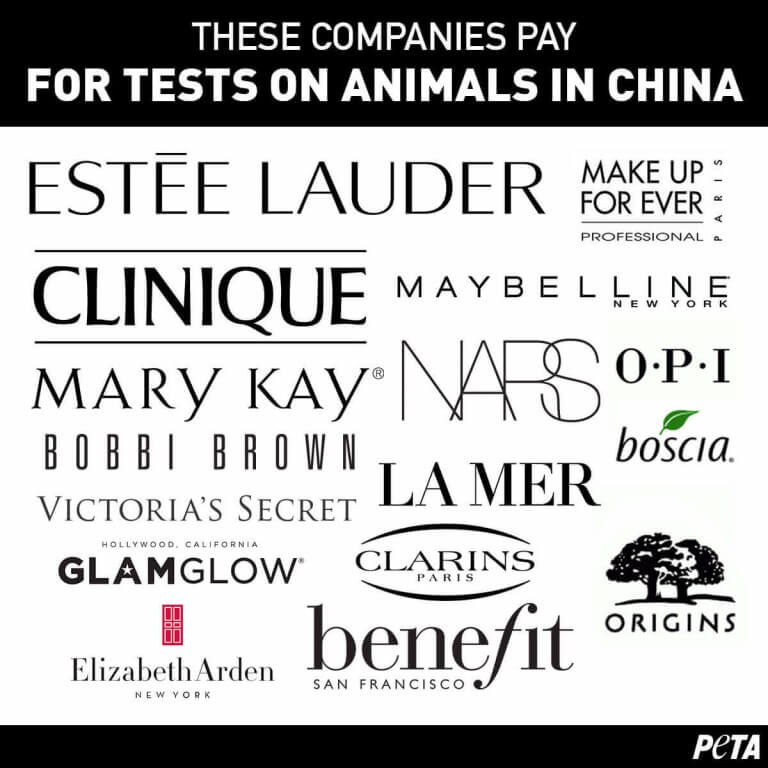
Equally consumers, nosotros all have the ability to help end fauna testing. Every time nosotros get shopping, we have an opportunity to vote with our wallets. Our daily choices send a powerful message to corporations: they won't have our coin as long as they conduct, committee, or pay for tests on animals.
15. What's the difference between cruelty-free and vegan?
Vegan products don't contain any animal-derived ingredients, while brute test–free ways that companies turn down to have their products or ingredients tested on animals. Look for products carrying the PETA US Dazzler Without Bunnies "Animal Exam–Free"/"PETA Approved Global Creature Test Policy" and "Vegan" logos.
16. Exercise cosmetics need to be tested on animals?
Given the wealth of non-animal approaches available for assessing the condom of cosmetics and their ingredients, there's no excuse for testing on animals. In the rare event that the condom of a cosmetics product or ingredient cannot be demonstrated using non-animal methods, information technology should simply not be used. The life of an animal is so much more than important than a tube of lipstick or toothpaste.
17. Why is animal testing unreliable?
Toxicity tests on animals piece of work on the premise that the consequence of a product or ingredient on animals predicts what will happen in humans, merely this is false.
Some of the animal tests required by police force have not been validated, meaning that their scientific ground, reliability, and relevance to humans have not been satisfactorily demonstrated. Fifty-fifty those tests that have been validated can be unreliable, failing to produce the same result when the test is repeated.
When you consider the biological differences betwixt humans and the animals unremarkably used in toxicity tests and the unnatural and stressful conditions these animals are forced to endure, this adds upward to meaningless results that fail to protect humans.
18. What can be used instead of animal testing? What are the alternative, non-animal methods of testing?
The Eu bans brought about a blast in the evolution of non-animal methods for assessing the safety of cosmetics and their ingredients. Superior approaches incorporating the use of cutting-edge tools like iii-dimensional tissue models and advanced computer simulations are at present used routinely to appraise the safety of cosmetics without harming animals.
Today, there'due south no reason for companies to inject guinea pigs with lipstick ingredients to bank check for painful skin reactions, force-feed rats shampoo ingredients for weeks or months –causing sickness, convulsions, weight loss, and death – or dose pregnant rabbits with face cream ingredients to meet whether their newborns will exist deformed.
19. Why practise companies still choose to exam on animals?
By choosing to sell in countries like Red china that withal crave tests on animals, companies are putting profit earlier ideals and condemning animals to endure and die for the sake of lipstick or shampoo. The state of affairs in the United kingdom of great britain and northern ireland and Eu is trickier, equally some ingredients suppliers are actively fighting exam requests.
Our message to regulators and companies is clear: only non-fauna methods should exist relied upon to bring a cosmetics product to market. If that's not possible, the ingredient should not be used.
20. What is PETA doing to assist animals used for cosmetics testing?
PETA and our global affiliates take been opposing cosmetics tests on animals for decades with middle-catching and provocative demonstrations and exposés of cruelty in laboratories. We have also been sharing information explaining why tests on animals are unreliable and not applicative (and fifty-fifty dangerous!) to humans and supporting modern, animal-free scientific discipline.
Behind the scenes, scientists from PETA and our affiliates meet with lawmakers, cosmetics brands, and ingredients suppliers; take the stand in legal and authoritative cases; prepare scientific papers and technical comments; and speak at international conferences and workshops. PETA has also helped fund the validation of a superior, non-animal test that can be used to help replace painful tests on mice and guinea pigs.
Recently, PETA joined forces with other animal protection groups and cruelty-gratis companies and brands to urge the president of the European Committee to suspend all requests for cosmetics ingredients tests on animals and allow companies to demonstrate the safety of ingredients using simply non-animal methods.
We will continue to practice all we tin can until no more animals are killed for the sake of an eyeshadow or deodorant.
21. What can I exercise to help animals used in cosmetics tests?
Employ the PETA United states Beauty Without Bunnies database to look for companies and brands that do not test on animals, and make sure the cosmetics you buy don't contain whatsoever animate being-derived ingredients.
Accept Action!
Join us in request the European Commission and ECHA to suspend all outstanding animal examination requests for chemicals used exclusively as cosmetics ingredients.
Knowledge is power. Share this page with your friends and family and encourage them to choose cruelty-gratis.
Sharing our content may hateful you likewise share your personal data with the chosen social media platform. Find out more than here.

How Is Makeup Tested On Animals,
Source: https://www.peta.org.uk/features/animal-testing-cosmetics/
Posted by: cooperbariders.blogspot.com
0 Response to "How Is Makeup Tested On Animals"
Post a Comment